


Editor’s note: This is the first in a three-part series on U.S. Sen. Samuel James Ervin Jr.
People are also reading…
- Wanted Alabama man leads Morganton officers on chase through grocery store
- 18-year-old identified as Lake James drowning victim
- Valdese man dies in hospital day after motorcycle crash along U.S. 70 in Hickory
- Body found in parking lot behind Valdese bank; police chief says foul play not suspected
- Morganton Ingles Market could see construction activity soon
- Valdese police release identity of man found dead near First Citizens Bank on Sunday
- Fire believed to be caused by lightning displaces family from Morganton home
- Construction permit issued for Ingles renovation in Morganton
- Jimmy John's in Morganton appears closed without notice
- Former 100 Main Valdese building has a new owner. Here's how much it sold for.
- 4 Burke County residents arrested after 200 grams of meth, 16 grams of fentanyl found
- Burke woman on Most Wanted List facing numerous charges in several counties
- Morganton Food Lion evacuated for bomb threat; Police found no devices
- Pedestrian hit by train, killed in downtown Hickory Thursday
- Major's Supper and Social in Valdese closes Wednesday
'Simple country lawyer' leaves mark on history
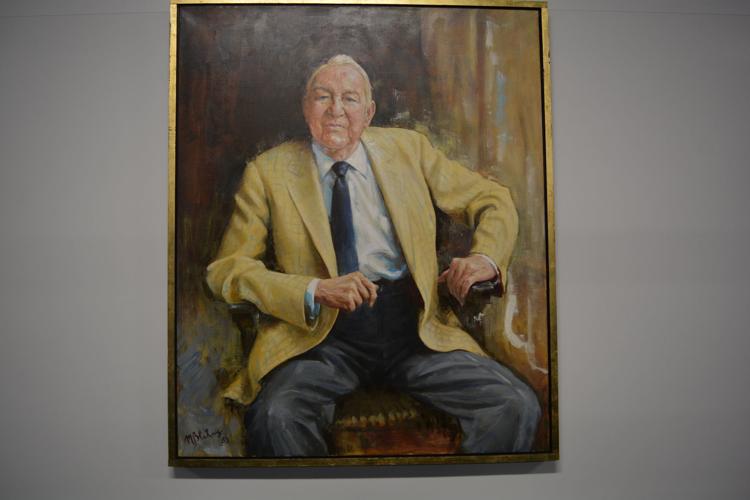
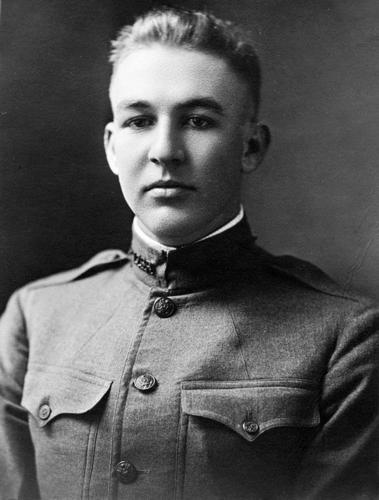
Born on Sept. 27, 1896, Sen. Samuel J. Ervin Jr. grew up in Morganton, served in World War I and attended Harvard Law School, according to his biography. Even before he became a lawyer, local Democrats nominated him for the North Carolina House of Representatives, and he was elected in 1922. He ran again and was reelected in 1924 and 1930.
After working as a lawyer for a while, Ervin became a judge. He worked his way through the state judicial system to become an associate justice of the North Carolina Supreme Court, a position he held until 1954, when the North Carolina governor appointed him to fill the U.S. Senate seat of Clyde Hoey, who had died in office. Ervin ran for the seat several times afterward, serving in the U.S. senate until 1974.
Ervin is most famous for his involvement on committees investigating the activities of U.S. Sen. Joe McCarthy in 1954 and the Watergate scandal in 1974. Ervin’s committee investigation into McCarthy led the U.S. Senate to censure McCarthy for his tactics of making unfounded accusations of Communist infiltration in various areas of U.S. government, according to historical record. The investigation into the Watergate incident, in which operatives of then U.S. President Richard Nixon were caught illegally wire-tapping representatives of the opposing political party, led to the president’s resignation.
Ervin was regarded as a strict Constitutionalist, putting literal interpretations of the document above even the cause of civil rights during the 1960s. He was opposed to the Civil Rights Act of 1964 solely on Constitutional grounds, though his biography notes he had no moral objections to racial equality.
Upon leaving the Senate, Ervin returned home and continued to practice law. He wrote several books before his death on April 23, 1985. He was 88 years old.
He was married to Margaret Bell Ervin, and the couple had three children: Samuel J.Ervin III, Leslie Ervin and Laura Ervin.
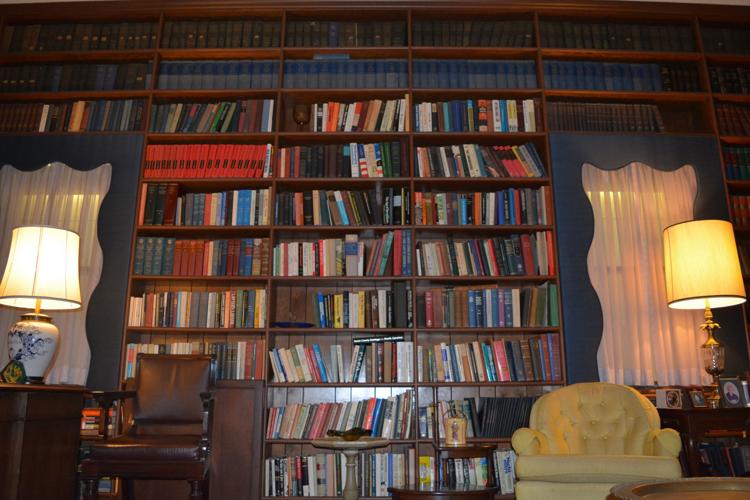
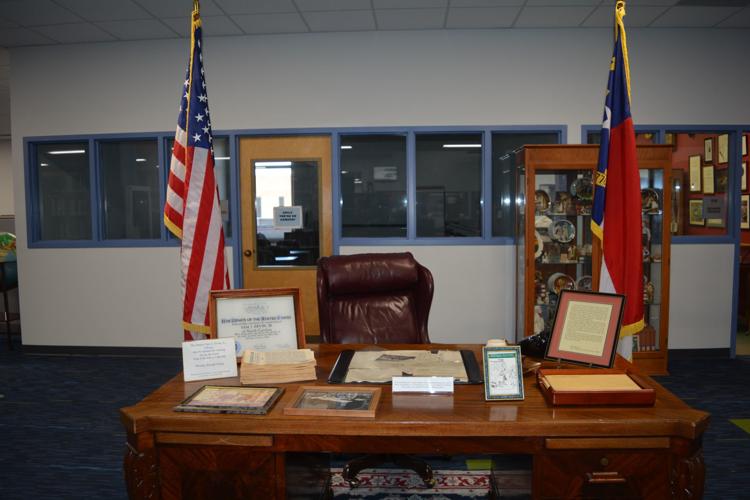
Residents of Burke County continue to honor the legacy of the self-proclaimed “simple country lawyer.” A statue of Ervin stands proudly on the grounds of the historic Burke County courthouse, and Western Piedmont Community College is home to the Sen. Sam J. Ervin Library and Museum, where his home office/library has been recreated with many of his possessions.
Be the first to know
Get local news delivered to your inbox!


